
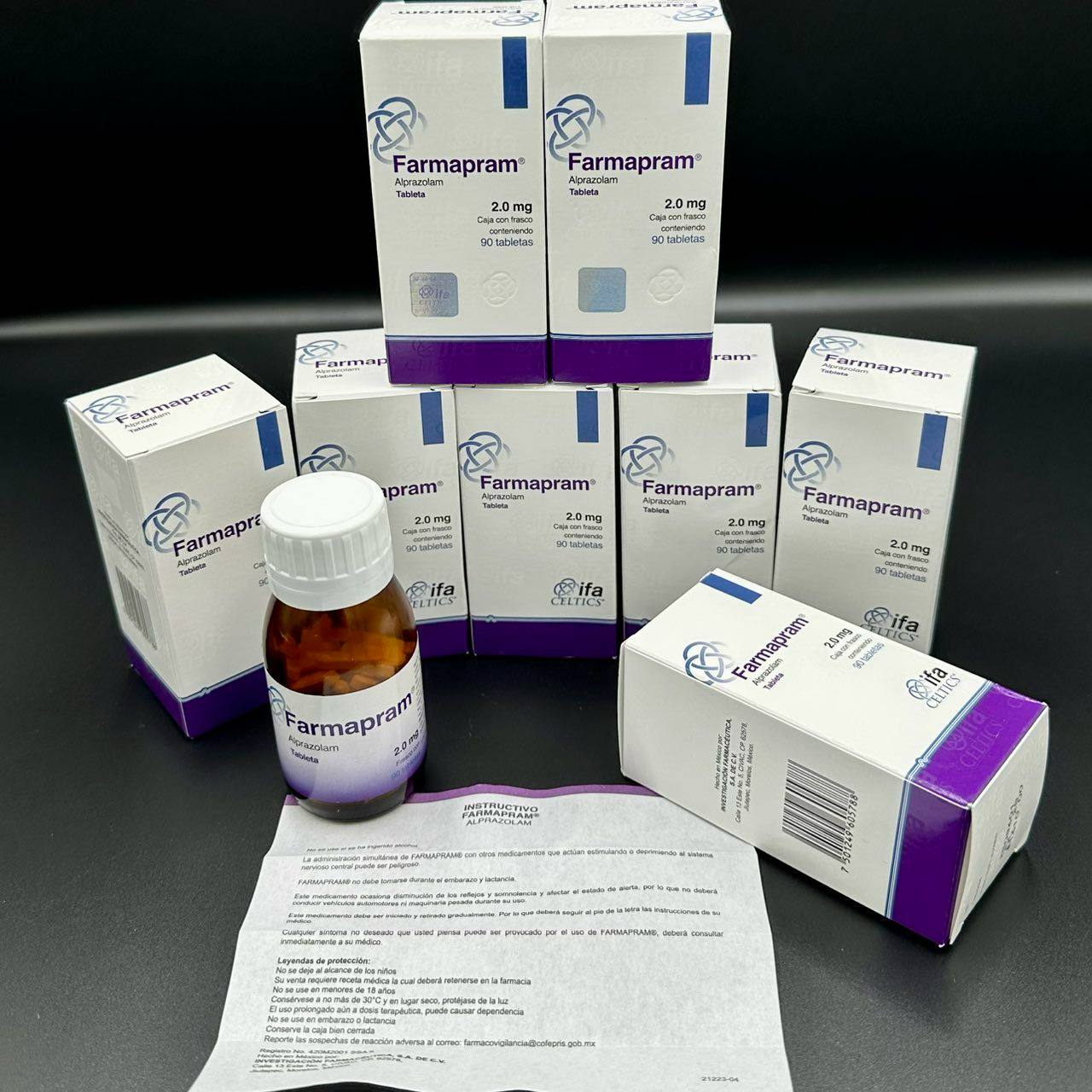
Buy 2mg Alp Xanax Bars Online

$208.00
Contraindications / special warnings:
- The official prescribing label warns about safe use of benzodiazepines including alprazolam; patients with certain conditions (e.g., acute narrow‑angle glaucoma, severe respiratory insufficiency) should not use it.
- Because of dependence liability, most recommendations call for using the minimal effective dose for the shortest possible duration.
What is Xanax (Alprazolam) and how does it work
Alprazolam belongs to the class of drugs known as benzodiazepines. Under the brand name Xanax, it is marketed for anxiety and panic disorders. Benzodiazepines enhance the effect of the neurotransmitter GABA (gamma‑aminobutyric acid) in the brain, which leads to calming of nervous system activity. Because of its relatively rapid onset (absorption within an hour or two) and moderate duration, it is often used when immediate anxiety relief is required.
In practical terms: Alprazolam reduces excessive brain excitability, calms racing thoughts, reduces physical symptoms of anxiety (such as tension, restlessness), and can help those experiencing panic attacks.
Approved Uses and Indications
According to the prescribing information, Xanax (alprazolam) is approved for:
- Generalized anxiety disorder (GAD).
- Panic disorder, with or without agoraphobia.
These are its main labeled uses. Many clinicians may also use it “off‑label” for related anxiety conditions, though doing so requires careful balancing of benefit vs risk.
Dosage, forms, and how to use
Alprazolam comes in several forms: immediate‑release tablets, orally disintegrating tablets, and extended‑release versions (Xanax XR) for certain indications.
Typical dosage guidance:
- For GAD (immediate release): starting at 0.25 mg to 0.5 mg three times daily; up to about 4 mg/day in divided doses for some adults.
- For panic disorder: starting ~0.5 mg three times daily, with possible increases in small increments every 3–4 days; controlled studies include doses in the 1‑10 mg/day range.
- Older adults or those with hepatic impairment start at lower doses (e.g., 0.25 mg 2‑3 times daily) because they are more sensitive.
Important notes: - Always follow the prescriber’s instructions exactly.
- The dose should be the lowest effective amount and treatment duration should be as limited as possible.
- For discontinuation: a gradual taper is recommended to reduce risk of withdrawal.
How quickly does it act & pharmacokinetics
Alprazolam is rapidly absorbed. Peak plasma concentrations typically occur within about 1 to 2 hours for the immediate‑release form. Its average elimination half‑life in healthy adults is about 11 hours (range ~6‑26 hours) for the immediate release. Because of its fast action and relatively short duration, it can relieve anxiety quickly, but also may wear off sooner, which is relevant from both therapeutic and dependence/withdrawal perspectives.
Efficacy: what it can do and what it cannot
What alprazolam can do:
- Provide relief of acute anxiety symptoms and panic attacks when used appropriately. Because of its GABAergic calming effect, it can reduce the physical and cognitive symptoms of anxiety.
- Help improve functioning for people whose anxiety or panic is preventing day‑to‑day activity (when used under supervision).
What it cannot do (or limitations): - It is not a cure for underlying causes of anxiety (e.g., unresolved trauma, long‑term psychosocial stressors); it addresses symptoms rather than root causes.
- Long‑term effectiveness is questionable; many guidelines caution against prolonged continuous use because of tolerance, dependence, rebound anxiety, and other risks.
- It is not appropriate in all anxiety disorders; for some conditions (e.g., certain phobias, obsessive‑compulsive disorder, post‑traumatic stress disorder) other treatments may be preferred or first‑line (e.g., SSRIs plus therapy).
In short: alprazolam can be a useful tool when used carefully, but should not be viewed as the only or indefinite solution.
Risks, side effects and cautions
Alprazolam carries significant risks and side‑effect considerations. Some of the key ones:
Common side effects:
- Drowsiness, sedation
- Dizziness, light‑headedness
- Memory or concentration difficulties
- Impaired coordination or motor skills
- Dry mouth, changes in appetite or weight in some cases
Serious risks & cautions:
- Dependence / addiction potential: Alprazolam has high misuse liability.
- Withdrawal syndrome: abrupt cessation (especially after prolonged use) can lead to withdrawal symptoms including rebound anxiety, insomnia, seizures.
- Interaction with other central nervous system (CNS) depressants (e.g., alcohol, opioids, sedatives): risk of excessive sedation, respiratory depression, overdose.
- Use with caution in older adults, in people with liver impairment or kidney disease, in pregnant or breastfeeding persons. The elderly are particularly vulnerable to falls, cognitive impairment and accumulation of drug.
Be the first to review “Buy 2mg Alp Xanax Bars Online”
Related products
PAIN RELIEF PILLS
PAIN RELIEF PILLS

PAIN RELIEF PILLS
Reviews
There are no reviews yet.